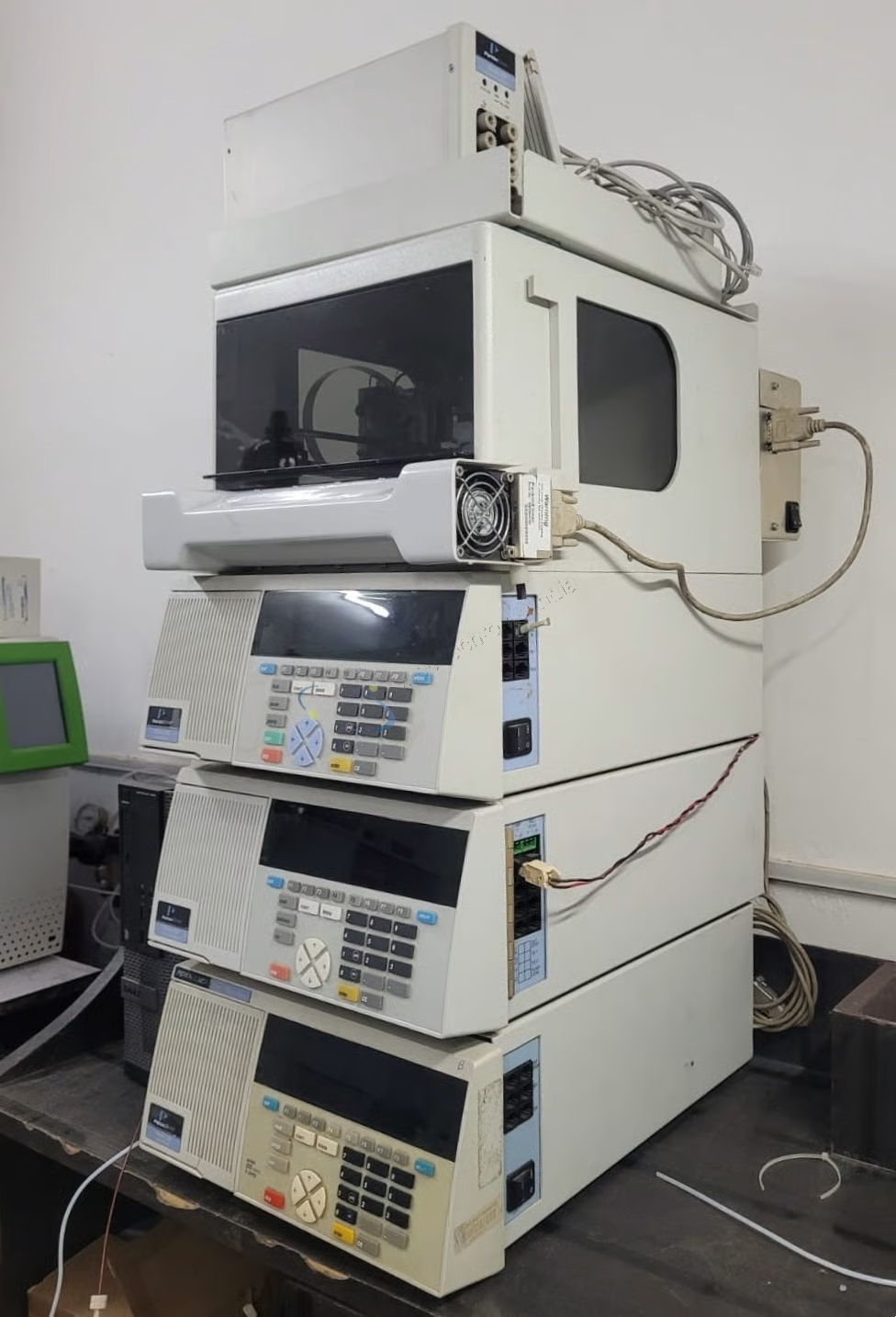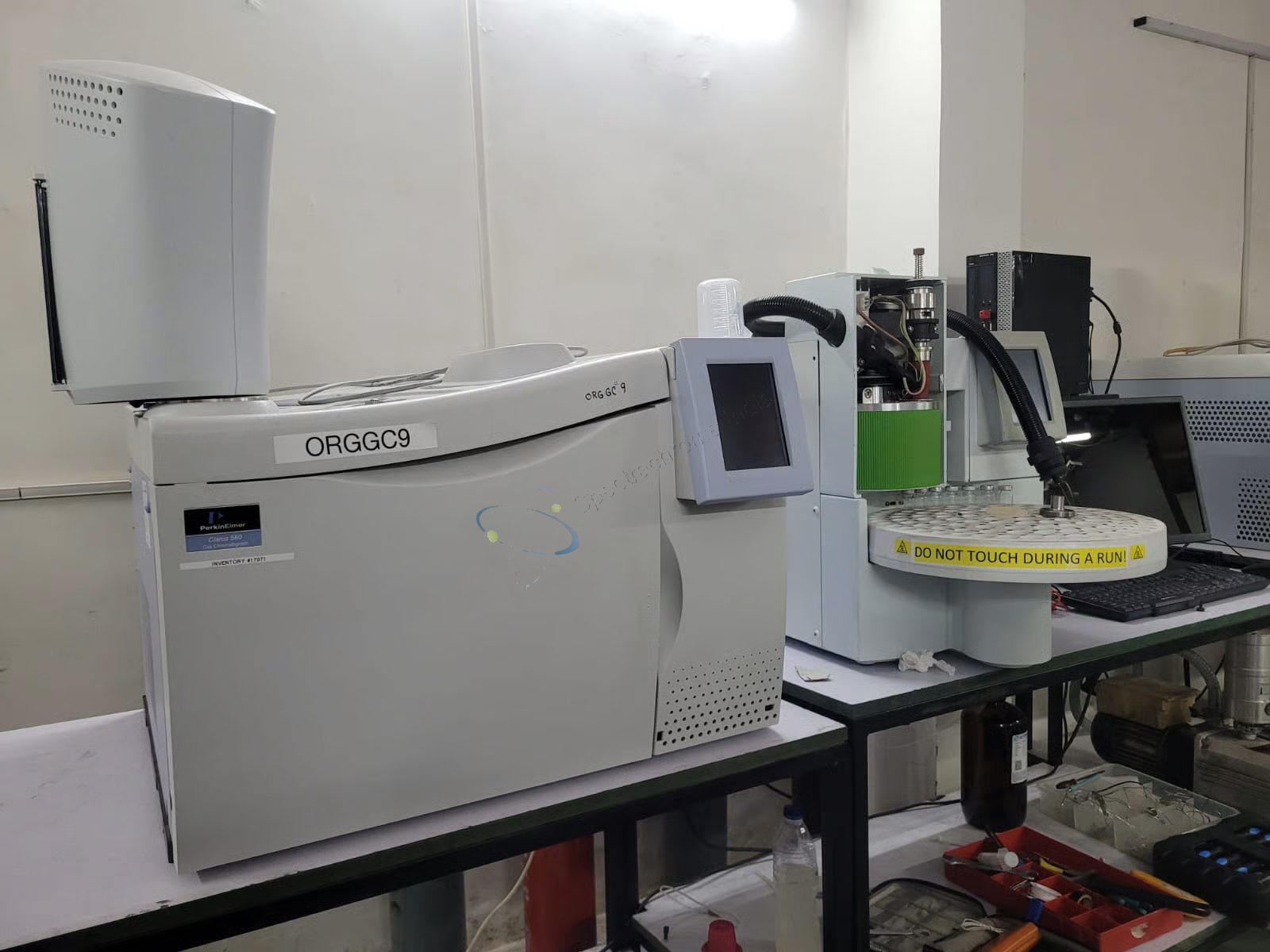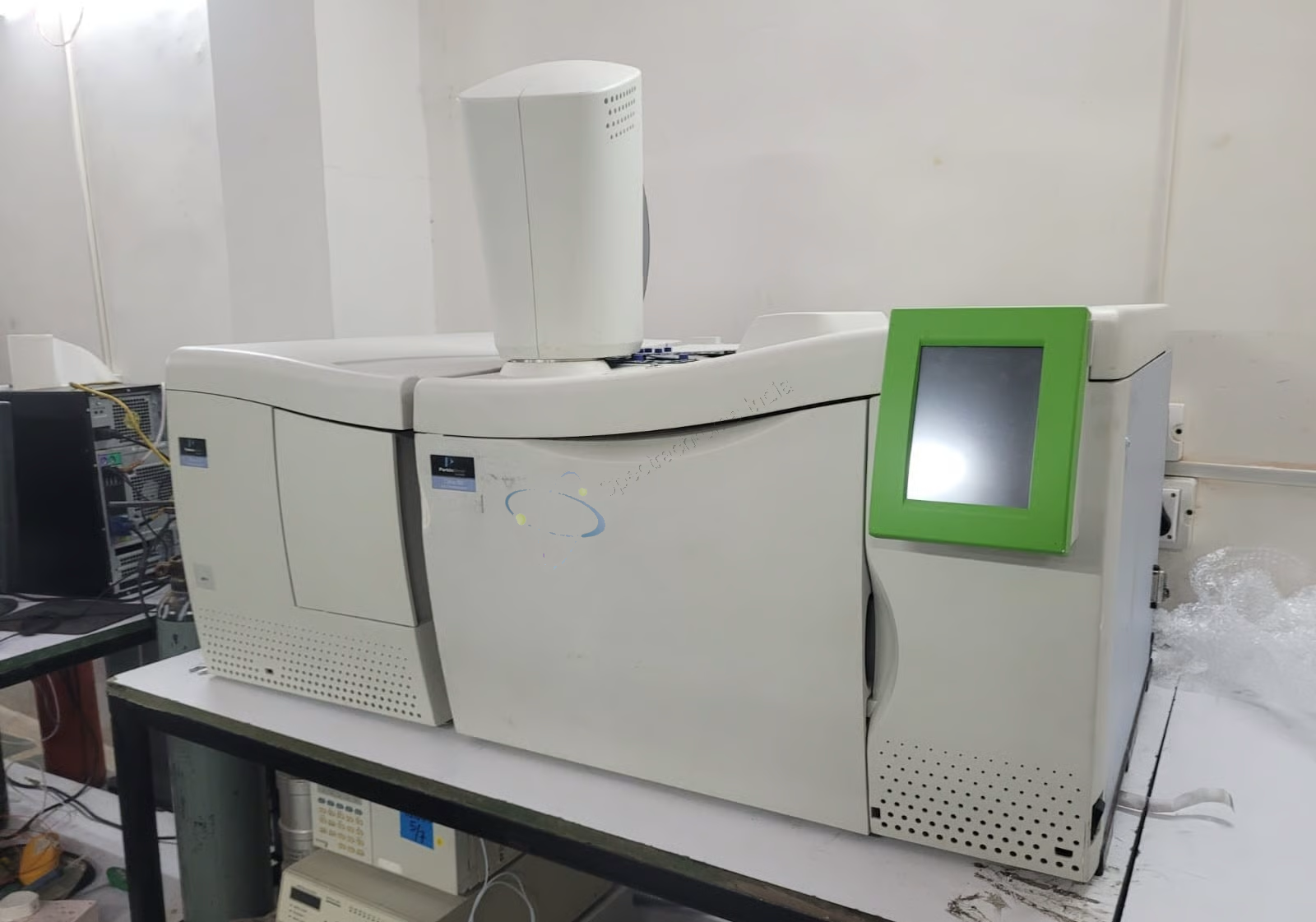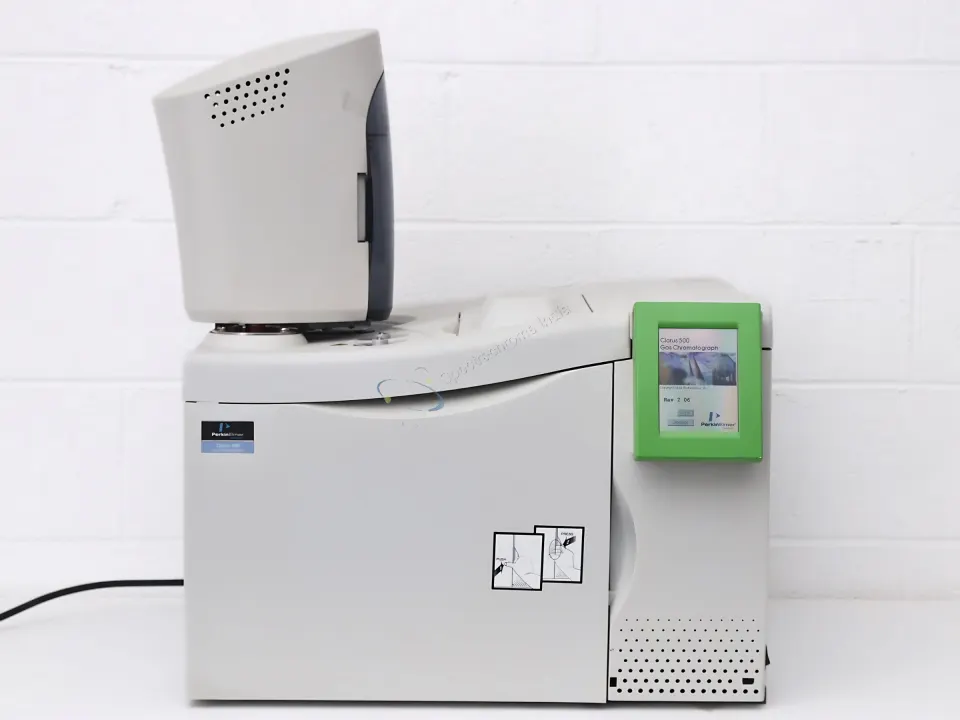
Perkin Elmer, Gas Liquid Chromatography
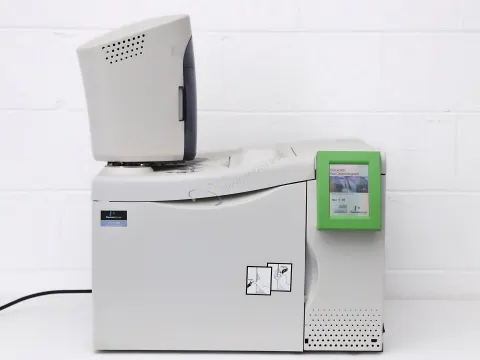
Refurbished Perkin Elmer® Clarus Gas Chromatography System
The Refurbished PerkinElmer® Clarus Gas Chromatography (GC) System is a fully automated, high-performance gas chromatograph designed for precise separation and analysis of volatile and semi-volatile compounds across a wide range of laboratory applications. Built on PerkinElmer's industry-leading Clarus platform, th...
Need Expert Advice?
Call us: +91 9958700332
Product Details
Why Buy This Refurbished Perkin Elmer Clarus GC System From Spectrachrome?
Stop paying full price for brand-new equipment. The Perkin Elmer® Clarus Gas Chromatography System is a globally trusted, high-performance analytical instrument and Spectrachrome brings it to your lab at 40–60% less than the new purchase price, fully certified and ready to run from Day 1.
Here's why hundreds of Indian labs trust Spectrachrome as their certified refurbished GC system dealer in India:
- Genuine OEM Parts — Only original Perkin Elmer components used during refurbishment. No counterfeit substitutes.
- Factory-Tested & Validated — Every unit undergoes multi-point performance testing before despatch. You get consistent, reproducible results.
- GLP/GMP Ready — Fully documented refurbishment trail for compliance-sensitive pharma and food testing labs.
- Significant Cost Savings — At ₹6,50,000, this is your best-value entry into a premium Perkin Elmer GC system without compromise on quality.
- Trusted Dealer Network — Spectrachrome is a leading supplier of refurbished analytical instruments across India, headquartered in New Delhi.
Order this certified refurbished GC system today and get your lab running faster, smarter, and at a fraction of the cost.
Key Specifications
| Specification | Details |
|---|---|
| Brand | Perkin Elmer® |
| Model Series | Clarus GC (Gas Chromatography System) |
| Condition | Certified Refurbished |
| Analysis Capability | Volatile & Semi-Volatile Compound Analysis |
| Automation | Fully Automated Operation |
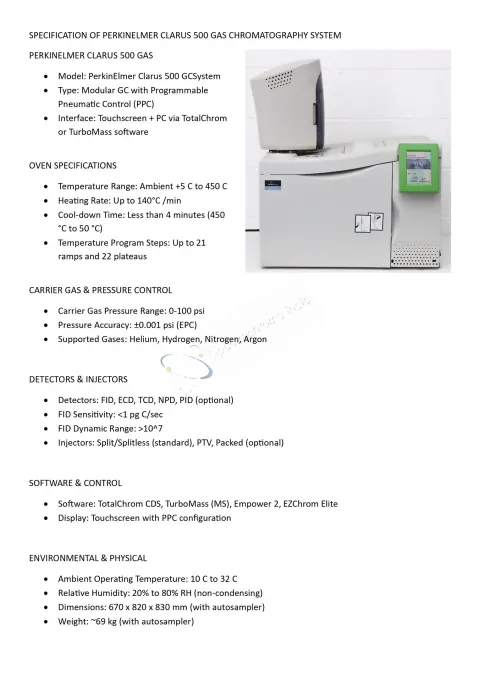
| Detector Options | FID, TCD, ECD, NPD (model-dependent) |
| Injection Modes | Split / Splitless, On-Column |
| Column Oven Temp. Range | Ambient +4°C to 450°C |
| Temperature Ramp | Programmable Multi-Ramp |
| Carrier Gas Compatibility | Helium, Nitrogen, Hydrogen |
| Software | TotalChrom / ChromeraGC compatible |
| Compliance | GLP / GMP Ready |
| Parts Used | Genuine OEM Perkin Elmer Parts |
| Price | ₹6,50,000 |
Our Refurbishment & Certification Process
When you buy a used gas chromatography system for sale from Spectrachrome, you aren't buying a second-hand machine you're buying a certified refurbished instrument that has passed a rigorous, documented quality process:
- Incoming Inspection — Full audit of hardware, electronics, detector, and software.
- Deep Cleaning & Decontamination — All fluidic paths, injector ports, and detector assemblies are cleaned to factory standard.
- OEM Parts Replacement — Worn or end-of-life components (septa, liners, ferrules, detector filaments, valves) replaced with genuine Perkin Elmer parts.
- Performance Calibration — Temperature accuracy, carrier gas flow, detector sensitivity, and baseline noise are calibrated against OEM specifications.
- GLP/GMP Documentation — Full refurbishment log, parts replacement record, and calibration certificate provided.
- Final Run Test — Real-sample chromatographic run to verify peak resolution, retention time stability, and detector response.
- Safe Packaging & Dispatch — Instrument packed in protective material and shipped via logistics partners for safe PAN India delivery.
Result: You receive a GC system that performs at near-new specification at up to 60% lower cost.
Who Should Buy This? Applications
The Perkin Elmer® Clarus GC System is the right instrument for labs requiring high-sensitivity, reproducible gas chromatographic analysis. Buy this refurbished GC if you work in:
- Pharmaceutical Industry — Residual solvent testing (ICH Q3C), purity analysis, raw material QC under GMP.
- Environmental Testing Labs — VOC analysis, pesticide residue in water and soil, air quality monitoring (EPA methods).
- Food & Beverage Testing — Flavor compounds, adulterant detection, solvent residues, aroma profiling.
- Petrochemical & Refining — ASTM/IP method compliance, hydrocarbon speciation, process gas analysis.
- Research & Academic Institutions — Analytical chemistry research, method development, teaching labs.
- Contract Testing Labs (CROs/CTLs) — High-throughput routine testing at significantly reduced capital expenditure.
Get certified refurbished GC performance for your application without the new-instrument price tag.
PAN India Delivery & After-Sale Support
Spectrachrome delivers and supports this refurbished Perkin Elmer® Clarus GC System across all major cities in India:
After-Sale Support Includes:
- On-Site Installation & Commissioning by trained Spectrachrome engineers
- Operator Training — hands-on training for your team at your lab
- Annual Maintenance Contract (AMC) — scheduled preventive maintenance & emergency call-out
- Warranty — included with every certified refurbished unit
- Spare Parts Support — genuine OEM Perkin Elmer consumables and spare parts available
You May Also Like
Explore similar instruments for your laboratory