Certified Lab Equipment Inventory
UV Visible Spectrophotometer
Explore UV visible spectrophotometers for pharma QC, food, water and research labs. Compare single and double beam models and request a quote.
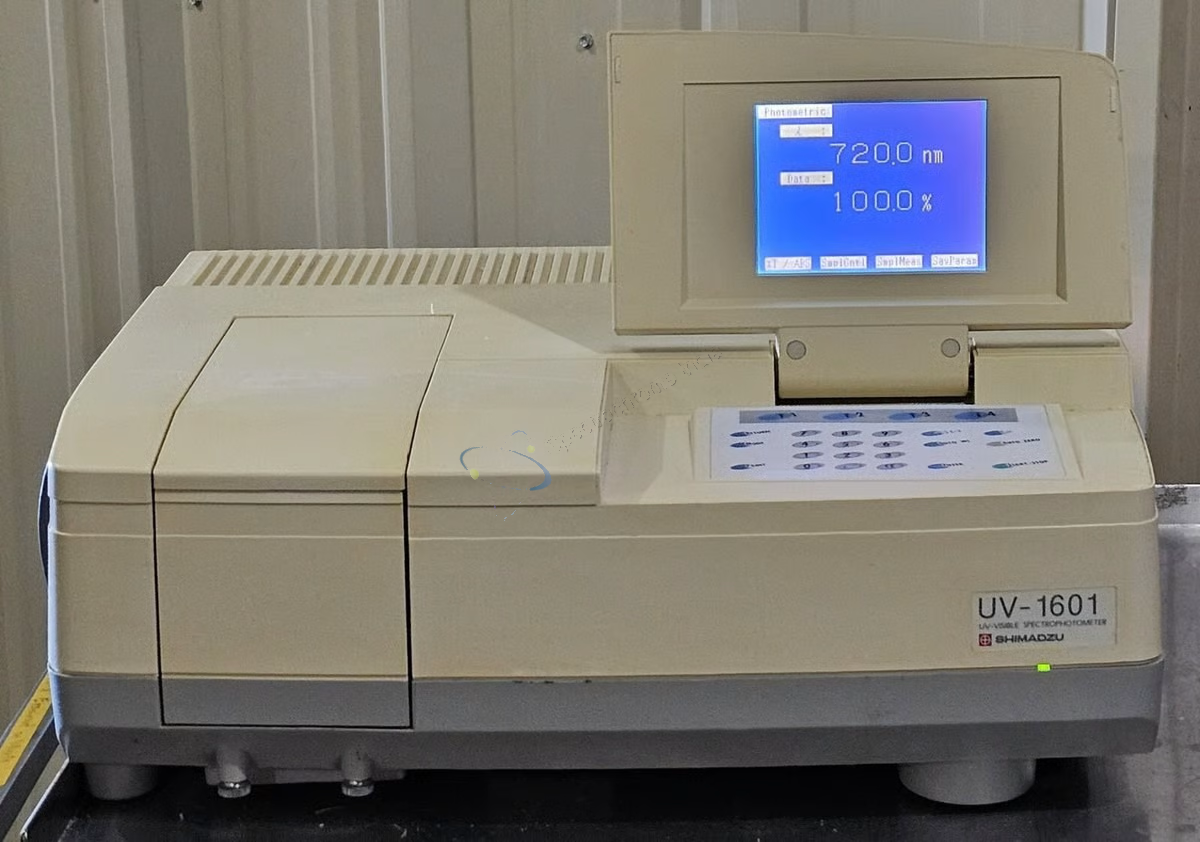
UV Visible Spectrophotometer at a Glance
|
Item |
Typical detail |
|---|---|
|
What it measures |
Absorbance or transmittance of a sample at each wavelength |
|
Wavelength range |
About 190-800 nm; some models extend to about 1100 nm |
|
Governing law |
Beer-Lambert law: A = ε × c × l |
|
Light sources |
Deuterium lamp (UV), tungsten-halogen lamp (visible) |
|
Wavelength selector |
Monochromator with a diffraction grating |
|
Detectors |
Photomultiplier tube, photodiode, diode array |
|
Sample holder |
Cuvette: quartz for UV, glass or plastic for visible |
|
Beam types |
Single beam, double beam |
|
Common uses |
Assay, dissolution testing, colorimetric analysis, kinetics |
UV Visible Spectrophotometer Models
Choose a model by four factors: wavelength range, beam type (single or double), spectral bandwidth and software. Products in this category are listed on this page. If you are unsure which one fits your method, share your application and sample type through the quote form and we will suggest the closest UV vis spectroscopy machine from the range.
What Is a UV Visible Spectrophotometer?
A UV visible spectrophotometer is an instrument that passes ultraviolet and visible light through a sample and measures the light absorbed. The reading shows which wavelengths the sample absorbs and how strongly. It is also called a UV vis spectrophotometer or UV visible spectrometer, and the technique itself is known as UV vis spectroscopy.
How Does a UV Visible Spectrophotometer Work?
The working principle of UV visible spectrophotometer models is light absorption: a selected wavelength passes through the sample, and the instrument measures how much light is absorbed. Absorbance is proportional to concentration, so an unknown sample can be quantified against known standards.
- A lamp produces light across the ultraviolet and visible range.
- A monochromator selects one wavelength and sends a narrow band of light toward the sample.
- The sample in the cuvette absorbs part of that light.
- A detector measures the light that passes through, and the instrument compares it with the light that went in.
Absorbance follows the Beer-Lambert law:
A = \varepsilon \times c \times l
- A is absorbance (no unit).
- ε is the molar absorptivity of the substance at that wavelength.
- c is the concentration.
- l is the path length through the sample, usually 1 cm.
This is the principle of UV visible spectroscopy and the core UV spectrophotometer principle. For reliable quantitative results, keep sample absorbance between about 0.1 and 1.0, where the relationship between absorbance and concentration is most linear.
UV visible spectrophotometer diagram showing lamp, monochromator, cuvette and detector.
What Are the Components of a UV Visible Spectrophotometer?
The five main parts are the light source, monochromator, sample holder (cuvette), detector and readout software. The components of UV spectrophotometer systems work in sequence, and together they make up the UV spectroscopy instrumentation and UV visible spectroscopy instrumentation found in any lab.
|
Component |
Function |
Common types |
|---|---|---|
|
Light source |
Produces UV and visible light |
Deuterium lamp (UV), tungsten-halogen lamp (visible), xenon flash lamp |
|
Monochromator |
Selects one wavelength at a time |
Diffraction grating with entrance and exit slits |
|
Sample holder |
Holds the cuvette in a fixed position |
Single cell holder, multi-cell changer |
|
Detector |
Converts transmitted light into an electrical signal |
Photomultiplier tube, silicon photodiode, diode array |
|
Readout and software |
Calculates absorbance, spectra and concentration |
Onboard display or PC software |
Light Source
The light source used in UV spectroscopy is normally a pair of lamps, because no single lamp covers the whole range. A deuterium lamp provides ultraviolet light and a tungsten-halogen lamp provides visible light. The instrument switches between them automatically.
Cuvette and Sample Holder
Cuvette material decides which wavelengths you can measure. A quartz UV spectroscopy cuvette transmits ultraviolet light, so it is required for UV work. Glass and plastic cuvettes absorb UV and suit visible-range work only.
|
Cuvette material |
Approximate usable range |
Use |
|---|---|---|
|
Quartz (fused silica) |
From about 190 nm |
UV and visible measurements |
|
Optical glass |
From about 320 nm |
Visible measurements |
|
Disposable plastic |
From about 380 nm |
Routine visible colorimetry |
Detector
The detectors used in UV spectroscopy include photomultiplier tubes (very sensitive), silicon photodiodes (compact and stable) and diode arrays (capture a full spectrum at once). The detector and its electronics set how little light the instrument can measure reliably.
Readout and Software
Software turns the signal into absorbance, spectra and concentration, and most modern UV spectroscopy equipment is controlled this way. Regulated labs should check for user levels, audit trails and report templates.
Single Beam vs Double Beam UV Visible Spectrophotometer
A single beam instrument measures the blank and the sample one after the other. A double beam instrument measures both at the same time, which gives better stability. Choose single beam for routine fixed-wavelength work and double beam for spectral scans, long-term stability and regulated labs.
|
Feature |
Single beam |
Double beam |
|---|---|---|
|
How it works |
Measures the blank first, then the sample |
Splits the light so blank and sample are measured together |
|
Stability |
Lamp drift can affect results between readings |
Compensates for lamp fluctuations in real time |
|
Typical use |
Routine quantitative work, teaching, simple QC |
High-accuracy work, spectral scans, regulated labs |
|
Cost |
Lower |
Higher |
A single beam UV visible spectrophotometer suits labs that run routine measurements at fixed wavelengths and re-blank regularly. A double beam UV visible spectrophotometer suits labs that scan full spectra or work to strict compliance requirements.
Double beam UV visible spectrophotometer diagram showing the beam split into reference and sample paths.
UV Visible Range and Key Specifications
The ultraviolet region is about 190-400 nm and the visible region is about 400-800 nm, so the UV visible range in nm is about 190-800. The exact UV visible wavelength range depends on the model; many extend to about 1100 nm, and UV vis NIR spectrophotometer models go further into the near infrared.
|
Region |
Approximate wavelength |
|---|---|
|
Ultraviolet |
190-400 nm |
|
Visible |
400-800 nm |
|
Near infrared (UV vis NIR models) |
Above about 800 nm |
When you compare a UV visible spectrophotometer, check these specifications:
|
Specification |
What it means |
Why it matters |
|---|---|---|
|
Wavelength range |
Lowest to highest wavelength measured |
Must include the wavelengths your method uses |
|
Spectral bandwidth |
Width of the light band at the sample |
Narrower bandwidth resolves sharp peaks better |
|
Wavelength accuracy |
Closeness of displayed to true wavelength |
Affects peak position and method transfer |
|
Photometric accuracy |
Correctness of absorbance readings |
Affects every concentration result |
|
Stray light |
Unwanted light reaching the detector |
Limits accuracy at high absorbance |
|
Baseline noise and drift |
Stability of the zero reading |
Affects low-concentration measurements |
How to Choose a UV Visible Spectrophotometer
Choose by application first, then wavelength range, beam type, bandwidth, software and service. A basic single beam model is enough for routine concentration work, while scanning, kinetics and regulated QC call for a double beam model.
|
If your work is |
Choose |
|---|---|
|
Routine concentration at fixed wavelengths |
Single beam, range that covers your method wavelengths |
|
Spectral scans, kinetics or high accuracy |
Double beam with narrow bandwidth |
|
Pharma QC and regulated testing |
Double beam with audit-trail software and documented performance verification |
|
Teaching and basic colorimetry |
Compact single beam model |
|
Measurements below about 340 nm |
UV-capable instrument with quartz cuvettes |
Before you buy, also confirm four things: the sample compartment and accessories you need, the software features, installation and training, and whether the supplier provides calibration certificates and qualification documents.
Applications of UV Visible Spectrophotometers
The application of UV spectroscopy covers any analysis where a substance absorbs ultraviolet or visible light. The application of UV visible spectrophotometer systems is widest in pharma, food, water, research and chemical labs.
|
Field |
Typical measurement |
|---|---|
|
Pharmaceutical QC |
Assay, content uniformity, dissolution testing, identity checks |
|
Food and beverage |
Colour, preservatives, additives, nutrient content |
|
Water and environment |
Nutrients, residual chlorine, metals by colorimetric methods |
|
Academic and research |
Nucleic acids at 260 nm, proteins at 280 nm, reaction kinetics |
|
Chemical and industrial QC |
Concentration, purity and colour of raw materials and products |
The UV principle in pharma testing is simple: many drug molecules absorb UV light, so absorbance gives concentration. UV vis spectrophotometers used for pharmacopoeial methods (IP, USP, Ph. Eur.) need regular performance checks.
Qualification, Calibration and SOP
The qualification of UV visible spectrophotometer systems proves that the instrument is installed correctly (IQ), operates as specified (OQ) and performs for the intended method (PQ). Routine performance checks then confirm it stays within limits.
|
Check |
Commonly used reference |
What it verifies |
|---|---|---|
|
Wavelength accuracy |
Holmium oxide filter or solution |
Wavelength scale is correct |
|
Photometric accuracy |
Potassium dichromate solution |
Absorbance readings are correct |
|
Stray light |
Potassium chloride solution at 200 nm |
Unwanted light is within limit |
|
Resolution |
Toluene in hexane (peak ratio) |
Spectral bandwidth is adequate |
Acceptance limits come from your pharmacopoeia and quality system. Many labs run a full verification at least once a year with shorter checks in between. Keep a written SOP of spectrophotometer use so every analyst runs and checks the instrument the same way.
Frequently Asked Questions
What is the UV visible range in nm?
The UV visible range in nm is about 190-400 nm for ultraviolet and 400-800 nm for visible light. Most instruments scan roughly 190-800 nm, and some extend to about 1100 nm. The exact range depends on the model.
What is the difference between UV and visible spectroscopy?
Both measure light absorption, but in different wavelength regions. UV spectroscopy uses ultraviolet light and detects compounds that absorb there, such as many organic molecules. Visible spectroscopy uses visible light and suits coloured samples. A visible spectrophotometer covers only the visible region, while a UV visible spectrophotometer covers both.
What is the principle of UV visible spectroscopy?
The principle is the Beer-Lambert law: absorbance is proportional to the concentration of the absorbing substance and the path length of light through the sample (A = ε × c × l). Measuring absorbance at a chosen wavelength therefore gives concentration.
Which light source does a UV visible spectrophotometer use?
Most use a deuterium lamp for the ultraviolet region and a tungsten-halogen lamp for the visible region, and switch between them automatically. Some instruments use a xenon flash lamp that covers both regions.
Which cuvette should I use for UV measurements?
Use quartz cuvettes for UV measurements, especially below about 340 nm, because glass and most plastics absorb UV light. Glass or plastic cuvettes are fine for visible-range work and cost less.
What is the solvent used in UV spectroscopy?
The solvent used in UV spectroscopy must be transparent at the wavelengths you measure. Water, acetonitrile, hexane, methanol and ethanol are common choices, with UV cutoffs of roughly 190-210 nm. Below its cutoff a solvent absorbs too strongly to give usable readings.
Should I buy a single beam or double beam instrument?
Buy single beam for routine measurements at fixed wavelengths where cost matters. Buy double beam for spectral scans, better long-term stability or high-accuracy and regulated work.
How often should a UV visible spectrophotometer be calibrated?
Follow your quality system and SOP. Many labs perform a full performance verification at least once a year, with shorter checks in between, and repeat it after repair or relocation.
What affects the accuracy of UV vis readings?
Stray light, dirty or mismatched cuvettes, air bubbles, a wrong blank, absorbance above the reliable range (above about 1.0-1.5) and lamp drift are the usual causes. Regular verification and good sample handling reduce them.
How do I choose a UV vis spectrophotometer for my lab?
Start with your application and the wavelengths your method uses, then compare wavelength range, beam type, bandwidth, software and service support. If you share your method and sample type, our team can recommend a model.
Get a Quote
Tell us your application, sample type and preferred wavelength range, and we will suggest the right UV visible spectrophotometer. Use the quote form on this page or contact Spectrachrome directly.